
Education- Foghlam
Highland Schooling
The provision of education was promoted through the work of the Scottish Society for Propagating Christian Knowledge (SSPCK), with nearly three hundred schools throughout the Highlands and Islands by the 1840s, reaching sixteen thousand young people.
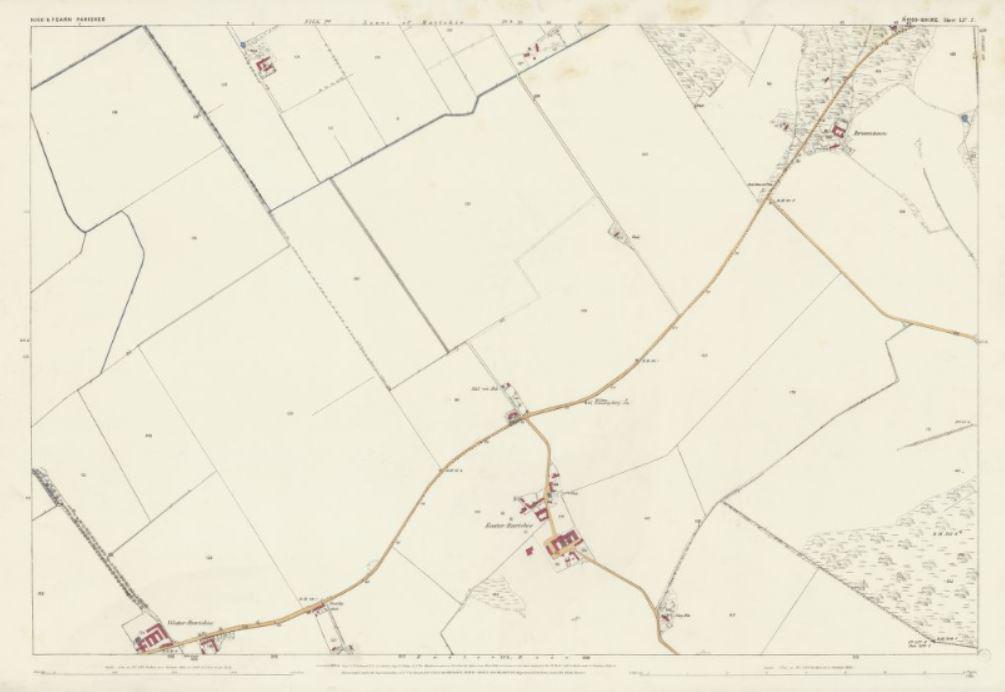
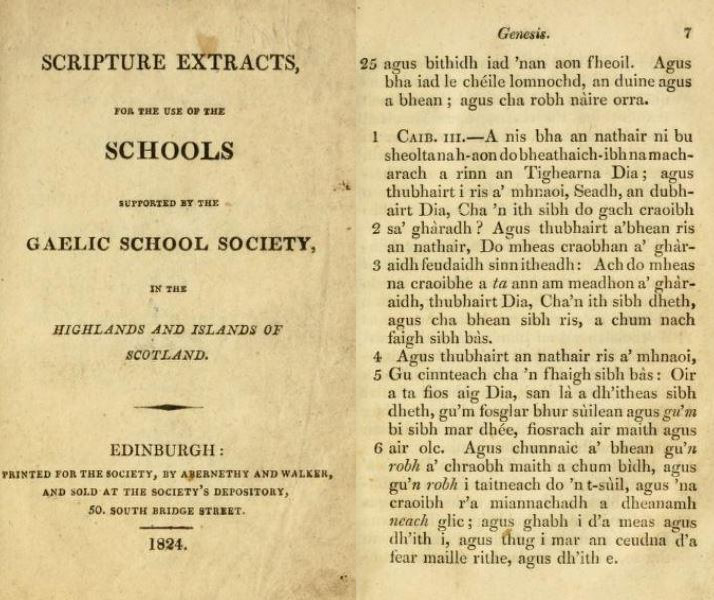
The Gaelic speaking communities of the north had their own “Society” schools where pupils were taught to read the sacred scriptures in their native tongue by qualified teachers, many of whom had attended the School of Divinity. Gaelic school “stations” were opened in the coastal villages of Hilton and Inver in the Parish of Fearn. It’s probable that John received at least part of his education at the Gaelic school at Hilton, where he achieved the academic qualifications to attain entry to University and Theological College.
The parish school at Nigg was at that time “not well suited for the population”, providing a basic education. His parents would have sought guidance from the local minister to ensure that John’s learning complied with the liberal values of the newly founded United Presbyterian Church at Chapelhill, in Nigg. Interestingly, missionary work was one of its core principles.
Hilton School attendance — selected dates between 1851-1872
|
YEAR |
BOYS |
GIRLS |
TOTAL |
TEACHER |
|
1851 |
17 |
18 |
35 |
John Maclean |
|
1857 |
24 |
39 |
63 |
John Maclean |
|
1869 |
45 |
37 |
82 |
Malcolm Morrison |
|
1872 |
49 |
51 |
100 |
William Macdonald |
Hilton school was removed in 1875, when children were compelled to attend Public School. Hilton, Balmuchy and Hill of Fearn schools transferred to the School Board of Fearn in December 1875.
Copying Exercise
Copying is an ancient and important part of learning to write and is a useful exercise for learning new languages. Take a seat at the 19th century school desk and have a go at copying the five themes of the Seaboard Sculpture Trail into English, Gaelic and Korean.
A Glowing School Report
In 1849, the “The Gaelic School Society” sent an inspector to Hilton to report on the standard of teaching, producing a glowing testimony of the teacher’s abilities and pupils’ readiness to learn.
Of the School at Hilton, taught by John McLean, he reports:
“At Hilton, of a roll of 72, there were 55 present on the inspector’s visit. The people are all fishermen and the school promises to be of very great benefit to them. I am quite delighted with the order and teaching of the school. The classes are well arranged and the discipline firm, yet mild, while the knowledge imparted is not inferior in quality or less in degree than in many purely English schools. Old and young attend the Sabbath-school and prayer meeting, more than the house can contain. The teacher has secured the attachment of the people and the minister respects him highly. The instruction, especially in Scripture History and Catechism, is very good. The 14th Chapter of John, which happened to be the day’s lesson for those in the New Testament Gaelic Class (22), was well explained and the children showed an intelligent interest in the subject. English reading, writing, and arithmetic, geography and grammar, are taught. The work of the school is much enlivened by the singing of hymns, the children evidently taking a pleasure in thus exercising their strong, clear, melodious voices. They are to build a new and larger house.”
The Written Word
John’s schooling gave him the skills he required to work in the Gaelic ministry in the Highlands and overseas in the Northeast China and Korean Missions. His natural flair for learning to read and write in new languages was a gift that John later relied on in China to communicate with local people and in his pioneering work translating the Gospels and New Testament into the Korean language. John knew the power of the written word in his missionary work.
Leave A Message
Reach Us
Seaboard Memorial Hall Ltd
East Street, Balintore, Highland, IV20 1UA
01862 832888
Company Ltd by Guarantee SC217924 & Scottish Charity SC025484